AgnesSensei.com — Sagu, salah satu vegetasi lahan basah dominan di DAS Rongkong, berkontribusi pada pengisian air tanah melalui kemampuan untuk melewatkan air ke dalam tanah.
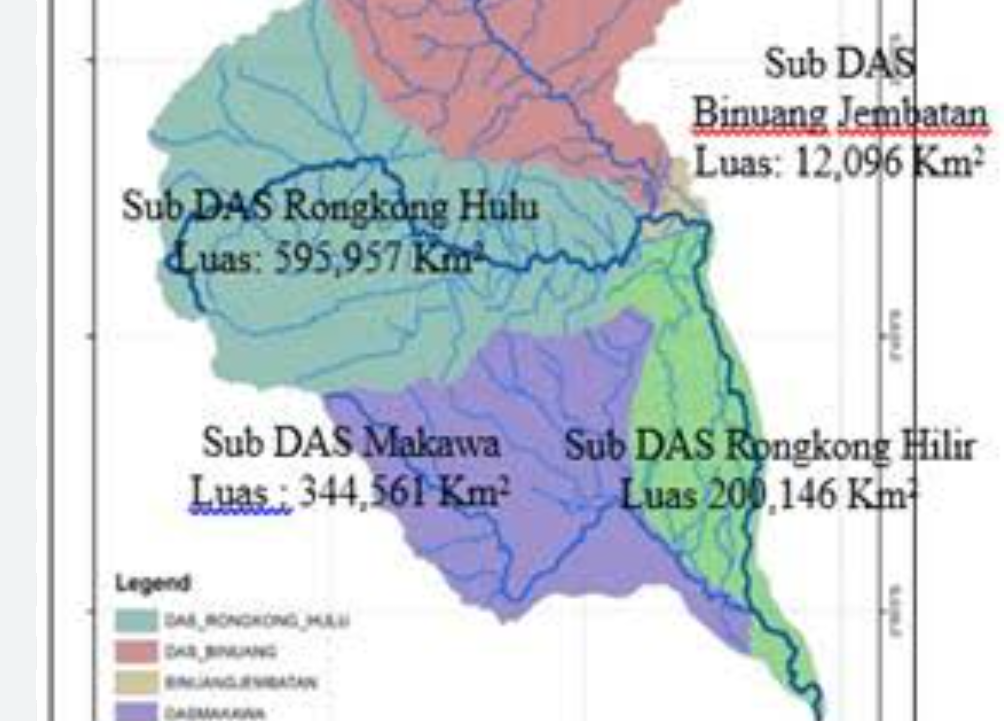
Penelitian ini bertujuan untuk menentukan pengaruh kepadatan kanopi hutan sagu terhadap laju infiltrasi di zona tengah dan hilir DAS Rongkong di Sulawesi Selatan.
Variabel independen lainnya adalah tekstur tanah, permeabilitas, kepadatan bulk, porositas, bahan organik tanah, kelembaban tanah awal, tinggi muka air, suhu udara, dan kelembaban udara.
Hubungan antara variabel independen terhadap laju infiltrasi dianalisis menggunakan regresi linier berganda.
Laju infiltrasi diamati dengan metode infiltrasi genangan pada lima kelas kepadatan hutan sagu.
Hasil penelitian menunjukkan bahwa laju infiltrasi di tengah DAS meningkat seiring dengan peningkatan kelas kepadatan hutan sagu.
Sementara itu, di hilir DAS, peningkatan kepadatan hutan sagu tidak berpengaruh signifikan terhadap laju infiltrasi.
***
Soil properties and infiltration rate in sago palm (Metroxylon sago) forest in Rongkong Watershed South Sulawesi
Pengarang
O Nelsi, U Arsyad, B Bachtiar, DA Rampisela
Tanggal terbit : 2021/7/1
Jurnal : IOP Conference Series: Earth and Environmental Science
Jilid : 807
Terbitan : 3
Halaman : 032053
Penerbit : IOP Publishing
Deskripsi :
Sago palm, one of the dominant wetland vegetation in the Rongkong Watershed, contributes to groundwater recharge through its ability to pass water into the ground. This study aims to determine the effect of sago forest canopy density on the infiltration rate in the middle and downstream zones of the Rongkong Watershed in South Sulawesi. Other independent variables were soil texture, permeability, bulk density, porosity, soil organic matter, initial soil moisture, water level, air temperature, and air humidity. The relationship between the independent variables on the infiltration rate was analyzed using multiple linear regression. Infiltration rate observes with ponded infiltration method at five density classes of sago forest. The results showed that the infiltration rate in the middle stream increased along with the increase of density classes of sago forests. The downstream, on the other hand, has an insignificant …
https://iopscience.iop.org/article/10.1088/1755-1315/807/3/032053/meta